Joe Saluzzi tried to get the word out. He really did make a good faith effort. This was one of his numerous appearances on Bloomberg, Fox Business News, CBS etc. The mainstream news media did not ignore him. He was interviewed for about 10 minutes in each station's Manhattan studio. Each appearance was broadcast live. Receiving that much air time is unusual.
23 May 2014

13 May 2014
The Cleveland Fed Drawing Board goes silent
I find Cleveland to be the most friendly of the 12 Federal Reserve districts. They do a lot of community outreach work, and have a good research department.
The Federal Reserve Bank of Cleveland is the headquarters of the U.S. Federal Reserve System's Fourth District. The district is composed of Ohio, western Pennsylvania, eastern Kentucky, and the northern panhandle of West Virginia.
The Cleveland Fed building was designed by architects Walker & Weeks. The building is considered an historically significant piece of architecture. I like how it looks too. Apparently, few know much about the art and architecture of the building, not even in Cleveland!
Evidence of friendly Cleveland Fed!Thank you! :-) RT @EllieAsksWhy: Contrast @gapingvoid w/hand-drawn, all-original artwork by @ClevelandFed http://youtu.be/hWdm9pp6NQU
— ClevelandFed (@ClevelandFed) June 6, 2011
The Federal Reserve Bank of Cleveland is the headquarters of the U.S. Federal Reserve System's Fourth District. The district is composed of Ohio, western Pennsylvania, eastern Kentucky, and the northern panhandle of West Virginia.
 |
| Main office in downtown Cleveland since 1923 |
The Cleveland Fed building was designed by architects Walker & Weeks. The building is considered an historically significant piece of architecture. I like how it looks too. Apparently, few know much about the art and architecture of the building, not even in Cleveland!
24 November 2013
Bitcoin in the limelight: Questions for buyers and investors
Bitcoin exchange vulnerability
The most high-profile vulnerable Bitcoin exchange was Mt. Gox. In April 2013, Mt. Gox was overwhelmed by a Distributed Denial of Service (DDoS) attack. The point, Mt. Gox speculated, was to destabilize Bitcoin transactions and fuel panic selling. After driving prices down, the attackers ceased the DDoS, and rushed in to buy Bitcoin at a lower price.
Life isn't fair but Bitcoin must be
Life might not be fair, but securities exchanges and currency markets require fairness. Without it, they will die. Trust is essential. Apparently, Mt. Gox was robust enough to withstand this DDoS incident. In their pursuit of unearned profits, the attackers took a selfishly short-term view. DDoS attacks and market manipulation can destabilize Bitcoin exchanges. If that happens often enough, it will undermine credibility in Bitcoin.
Mt. Gox wasn't uniquely vulnerable. In the past few months, there were other DDoS-related Bitcoin extortion incidents: BTC-China was brought down in September 2013, and BIPS, a European payment provider, experienced a DDoS attack two days ago, on 26 November 2013.
27 October 2013
Paleo specie
This is BB Billosaur, a ceramic piggy bank for paper currency. He is made by Le Mouton Noir & Co. Le Mouton Noir is located in New York City. I am not surprised (I miss it there).
The store owners describe their motivation:
BB Billo seems difficult to resist: A paper currency-only porcelain piggy with holes down his back emulating a Stegosaurus-like Mohawk, made by black sheep!
The store owners describe their motivation:
For many years we have followed the heard like a flock of sheep. Working hard, learning and growing, we have never let go of our dream. The black sheep finally wakes up and steps forward to have some fun.
 |
| Billo-saurus! |
BB Billo seems difficult to resist: A paper currency-only porcelain piggy with holes down his back emulating a Stegosaurus-like Mohawk, made by black sheep!
25 October 2013
Account hijackers
If a message originates from a familiar name or email address, its likelihood of making it through spam filters is greater.
Google described their efforts to minimize harm to users due to email account hijacking:
The number of compromised accounts decreased by 99.7% since 2011. That's impressive, for a sustained reduction! How does Google avoid false positives? I am so curious about the specific details of their filtering rules!
The blog post was written in March 2013. It is remarkable that the same methods continue to be effective, as Gmail spam-attackers would perceive this as a new challenge to be overcome.
I suspect that Google's methods are analogous to those used by the U.S. Department of Health & Human Services' Centers for Medicare & Medicaid Services (CMS) in detecting medically unlikely edits (MUEs). MUEs can be accidental, due to claim coding or data entry errors. MUEs can also be deliberate, when there is fraudulent intent, e.g. by filing for more services, or for more expensive services. Regardless of intent, MUE identification reduces paid claims error rates.
How will the Affordable Care Act impact existing processes for detecting MUEs, and for setting benchmarks? CMS does not disclose its MUE criteria for the same reasons that Google will not reveal details about their 120 signals.
Continuous improvement is a part of life, for email-spam account hijackers, Google and the fraud detection team at the Centers for Medicare and Medicaid Services.
I wrote a post about health care, with a much more Ellie-centric theme, a few years ago. That was when I worked as statistician for ACCCHS, Arizona's state-administered Medicaid/Medicare program, monitoring program performance and quality of care.
Google described their efforts to minimize harm to users due to email account hijacking:
"Our security team...saw a trend of spammers hijacking legitimate accounts to send their messages. [We developed] a system that uses 120+ signals to...detect whether a log-in is legitimate, beyond just a password."Less than 1% of spam emails make it into a Gmail inbox.
 |
| Legitimate Gmail accounts blocked for sending spam versus time |
The number of compromised accounts decreased by 99.7% since 2011. That's impressive, for a sustained reduction! How does Google avoid false positives? I am so curious about the specific details of their filtering rules!
The blog post was written in March 2013. It is remarkable that the same methods continue to be effective, as Gmail spam-attackers would perceive this as a new challenge to be overcome.
120 Signals
I suspect that Google's methods are analogous to those used by the U.S. Department of Health & Human Services' Centers for Medicare & Medicaid Services (CMS) in detecting medically unlikely edits (MUEs). MUEs can be accidental, due to claim coding or data entry errors. MUEs can also be deliberate, when there is fraudulent intent, e.g. by filing for more services, or for more expensive services. Regardless of intent, MUE identification reduces paid claims error rates.
How will the Affordable Care Act impact existing processes for detecting MUEs, and for setting benchmarks? CMS does not disclose its MUE criteria for the same reasons that Google will not reveal details about their 120 signals.
Continuous improvement is a part of life, for email-spam account hijackers, Google and the fraud detection team at the Centers for Medicare and Medicaid Services.
I wrote a post about health care, with a much more Ellie-centric theme, a few years ago. That was when I worked as statistician for ACCCHS, Arizona's state-administered Medicaid/Medicare program, monitoring program performance and quality of care.
16 July 2013
Performance improvement in state-funded healthcare for children
I noticed a job listing the other day, as "Director, Performance Improvement". It would likely be an intellectually satisfying and fulfilling employment opportunity. The job is a full-time, direct hire position with Health Services Advisory Group Inc. (which goes by the unfortunate acronym, HSAG and pronounced as H SAG), in Phoenix, Arizona.
My previous work in public health was with the Office for Children with Special Health Care Needs (OCSHCN), where I was an employee of the Department of Health Services of the State of Arizona (AZDHS). My title was Statistical Research Chief, and I had a staff of two programmer analysts.
OCSHCN and and its associated managed care program, the Childrens Rehabilitative Service (CRS), were in charge of most aspects of program management, including retroactive clinical assessments by nurses, as well as provider contracting decision-making. Arizona's Medicaid agency, the Arizona Health Care Cost Containment System (AHCCCS) provided billing support and auditor oversight.
In addition to performance evaluation and utilization management, I enjoyed a diverse range of duties that included epidemiological studies, PHI (Protected Health Information) security, pharma utilization, and provider payment (and beneficiary claim) fraud detection. However, the downside was that it was very difficult to work with the independence required to do performance and quality assessor for OCSHCN, while an employee of the program itself.
 |
| Programs funded by the U.S. HRSA Title V Block Grant for Women & Children |
11 March 2013
Compressed data for prayer, anagrams and digital rights management
I found an oddly contemporary-looking New York Times article that is in fact, quite vintage for the Internet. It begins with a review of a most peculiar e-commerce company:
via The New York Times Online, 31 August 1999.
Image provided courtesy of archive.is
doing business with Newprayer.com may require a leap of faith.- Compressed Data: Beaming Prayers to God's Last Known Residence
via The New York Times Online, 31 August 1999.
 |
| Last known location of the divine is easier to find than this website |
The Internet Fraud Watch for the National Consumers League was deluged with complaints about fraud on the Net, having received 7,700 last year and 6,000 through the first six months of 1999.If they only knew what was to follow, in less than ten short years.
03 December 2012
MintChip denouement
The Royal Canadian Mint is the official mint of the Canadian government. In March 2012, the Royal Mint announced that it would discontinue all future production of penny coins. A week later, the Toronto Star ran a news story, in which the Royal Mint introduced the first national digital currency in North America, the MintChip.
A Royal Canadian Mint spokesman provided the following description:
A rather intriguing contest, MintChip Challenge was announced in the same Toronto Star article. MintChip Challenge was an app developer contest sponsored by the Royal Canadian Mint, with top prizes to include the equivalent of CAD 50,000 of gold bars and coins, in gold bullion, i.e. 99.99% gold.
The top comment on the Toronto Star article offered this suggestion:
The official website hasn't provided much information. I was curious. Erstwhile gAt0mAl0 was curious too:
A Royal Canadian Mint spokesman provided the following description:
MintChip doesn’t plan to link to a person’s bank account or credit card information. And unlike BitCoin, a peer-to-peer hosted digital currency with a fluctuating value, MintChip is simply a new way to exchange Canadian dollars. Plus, it’s backed by the Canadian government.The MintChip doesn't satisfy criteria for what I would consider a bona fide currency. Rather, it seems more like a type of electronic payment network for the Canadian Dollar.
Golden prize
A rather intriguing contest, MintChip Challenge was announced in the same Toronto Star article. MintChip Challenge was an app developer contest sponsored by the Royal Canadian Mint, with top prizes to include the equivalent of CAD 50,000 of gold bars and coins, in gold bullion, i.e. 99.99% gold.
The top comment on the Toronto Star article offered this suggestion:
Did you know that one of the leading proposals for how to use MintChip is for purchasing bitcoin? Because of the irreversibility of MintChip transactions, this would solve a lot of issues. See paragraph 6 of MintChip Misses the Point of Digital Currency via Forbes.MintChip Challenge generated much excitement. The 500 entry spots were filled in merely four days! Prize winners were to be announced on 25 October 2012.
What's up with MintChip?
The official website hasn't provided much information. I was curious. Erstwhile gAt0mAl0 was curious too:
So what happened with MintChip – Canada’s digital currency? It has disappeared into the Bermuda Triangle of digital currency holes – a news blackout.The denouement of MintChip Challenge was distinctly anticlimactic. gAt0mAl0 explains more about the Canadian MintChip, and Bitcoins too. Alternatively, you may prefer to explore gAt0's rather impressive Bitcoin Mind map chart, featured in his prior post, Bitcoin and Forex Trading which I enjoyed much more than the entire MintChip mess, from start to muted finish.
09 September 2012
Curious Facebook related query
Observations from the hinterlands
Quora is a privately-held company and is located in Mountain View, California. It was founded by two former Facebook employees, Adam d'Angelo and Charlie Cheever.
Quora raised two rounds of private financing to-date. Peter Thiel and Jeff Hammerbacher (former Facebook database manager; now founder of a big data start-up, Cloudera) are investors, among others. TechCrunch's CrunchBase has some information regarding Quora's multiple funding rounds.
Why is this relevant?
Bret Taylor was the Chief Technology Officer of Facebook. He announced his intention to depart the company in mid-June 2012, approximately one month after the Facebook initial public offering on the NASDAQ in May 2012.
As of June 20, 2012, Mr. Taylor was no longer listed on the Facebook website as a member of the management team, nor on the board of directors, nor anywhere else. There have been no subsequent announcements from Facebook regarding his status, although I have not done an EDGAR search to confirm.
At present, the position of Facebook CTO is vacant. Adam d'Angelo is the former Chief Technology Officer of Facebook. And THAT is why this is relevant.
IT at Facebook?
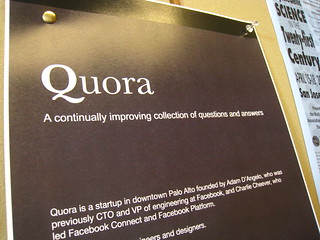 |
| Quora on campus recruiting at Stanford University in 2008 |
04 August 2012
Craft work
This ornate butterfly is an anti-maccassar. It is one of many in a set of Lepidoptera-themed craft work. Clicking on the image will take you to the rest. It is not my work. I can knit. Poorly.
Although the image description says "crochet", I think this resembles embroidery or needlework, as it is so finely detailed. It is beautiful, especially those curled antennae.
Anti-maccassars are those little covers on the arms rests and backs of chairs. They aren't doilies. I tried to find a less arcane sounding word, to no avail. Alternative word suggestions are welcomed as comments!
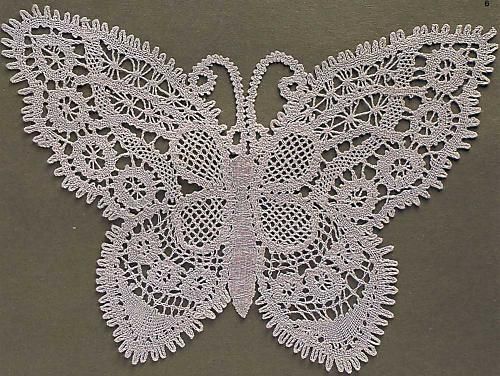 |
| Crocheted butterfly |
Anti-maccassars are those little covers on the arms rests and backs of chairs. They aren't doilies. I tried to find a less arcane sounding word, to no avail. Alternative word suggestions are welcomed as comments!
Subscribe to:
Posts (Atom)